Showing posts with label outline. Show all posts

Wednesday, April 19, 2017

If You Can't Think of Anything to Write, Insert A Dragon

I Did It!

I overcame my fear with a compromise. I started a webpage for my co-author and myself.

hawkandyoung.wordpress.com


I went with the free version for now, to learn how to add pictures, choose a theme, and post blogs. I am paying for hosting. Perhaps I will one day upgrade to a paid domain, but for now I am content.

Hawk and Young have a Facebook page, a Twitter, and a YouTube, but there are only two videos. My goal for the summer is to script some video.

Why the dragon? The book we are currently working on involves a dragon.

Plus, 'if you can't think if anything to write, insert a dragon'. :)

We haven't been stuck without anything to write with this story. Young had an outline planned a year ago. Outlines rock!

This story started out with a dragon and has grown to be so much more. When we work together, we have more ideas. You'd expect that with two brains instead of one. The fun part is listening to them and working them into a cohesive whole.

We've stuck pretty closely to the outline. I expressed an opinion about a female character that we need to do more with, and he agreed, so we'll add that when we get there. I've done some research into Flora and Fauna of the area, as well as fishing practices and old legends. Good writing takes research.

#Didyouknow that the dragonship of the Vikings used to be thought cursed and ships bearing the dragon were not allowed on the coast of Iceland. Now the boats are part of their heritage and embraced.

Saturday, January 28, 2017

Editing: Timekeeping

In my last post I talked about my issues with finding time in my busy schedule to write, but in this post I want to talk about time in my stories.
http://prosureacquisitions.co.uk/wp-content/uploads/2015/09/fast-forward.jpg

One of the biggest areas that trip me up when editing and writing a first draft is the flow of time in the book. Sometimes the season makes a difference, or the time of year in a YA novel where school is involved, but most often it is the time between events. Whether minutes, hours, days, or months, time and the order of events matters.

Time is affected when I edit. If I go chopping out scenes, I lose the time it took for my character to be there. I need to address that time in words.

The best way to handle time is to outline your story first. If you need to rearrange scenes to make the story flow better, you can do this before the scenes are shaped by setting. Your outline doesn't need to be full of every detail, but it does need to have all your important turning points, struggles, and the outcome of your story.

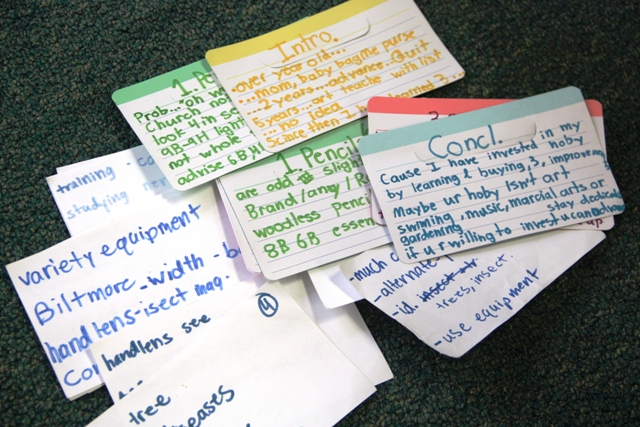
If you are a 'pantser', meaning you write by the seat of your pants, you still know how you want your story to end, even if it's just a feeling you want your character to convey to the reader. You don't even have to write in order, but having a small blueprint will allow you to work out from your central idea. For pantsers,  perhaps your outline is on notecards that you can fluidly move around.


Some stories mess with time. These are more difficult to track in edit-mode, so an outline is essential. Maybe 3 or 4 timelines are needed to keep track. Many things from your many plots can happen on the same day, even at the same time. You need to have a master outline where the storylines intersect. your outline might look like a chart in this case. Then you can write your scenes in any order to allow your reader to flashback or discover tidbits as your character goes along that reveal more and more of the plot.


The point is, TIME matters. How your readers follow along with you matters. If you mess with time, then you will lose your readers. Things become incomprehensible.

Unless you mess with it in the right way, leaving foreshadowing and tidbits of clues to pull the reader through the muddled mess to clarity. :)

Sunday, January 22, 2017

On Writing: Form and Time Management

Yeah, I haven't worked on the Love book at all.
Weekends are too short! My to-do list and my to-read list are too long!
http://www.dearhancock.com/blog/wp-content/uploads/2011/05/agatha_christie.jpg

I've been working on other things; webinars on overcoming distractions and streamlining your work, updating my book covers on smashwords as I promised, doing a little bit or writing, typing a bit more of a  manuscript for a friend, and working with my husband on a new way to collaborate online in real time on our book series.

I also work full time, tutor two afternoons a week, and this weekend I celebrated my son's 14th birthday. My weekends usually have something going on.

So when do I write???

I write while I am watching a show, or in bursts when I feel the creative juices flowing and I have an idea. Did I learn anything from these webinars on streamlining my work? Basically, when you plan out a story, use an outline. Have an idea of where the story should go. Add in stuff. Expand the outline.

When I write micro fiction, I usually only have a feeling and a character in mind. That's it. I add in setting, other characters as necessary, and I edit and develop as I go. It's micro fic. It needs a set up, delivery, and twist or some sort of conclusion. Bam.

If I'm going for a novel, I need plots, subplots, the epic battle scene be it external or internal, characters, settings, and some research. Sometimes bits and pieces of this process are fun. Developing book covers, finding pictures of characters, typing up the outline, each process is a project. Writing time is when details start to flow.

Basically the outline is like this:
Story beginning - intro the main character and main problem
Things happen TO the character to cause them some discomfort
A big incident happens to cause them to wake up and take action
They react to the incident, they can fail
The Villain enters and readers get some info
They react and plot to try to outwit the villain, they can fail
They find the missing piece of the puzzle and can conquer
They conquer
Story Ending


If I get stuck, it's probably because I strayed from the outline. It happens. Sometimes I can weave my way back to the original idea. Sometimes I have to change things. Too much change, however, causes me to stop. I might drop a project. If I drop it for too long I will forget what I was working on, but sometimes going back a while later gives you new perspective. You can look at it with fresh eyes and maybe fix the outline or edit the prose to shape it into a masterpiece.

There will always be distractions, work, and life things that happen. Find time for your loves. If writing is one thing that makes you happy, then do it. Research. Design a book cover. Begin an outline. Look up pictures to model your characters on. Don't waste a moment. The time is there if you take it.

Friday, July 10, 2015

How I Outlined My Novel And Why I Love It

I'm distracting myself with writing for Camp Nanowrimo. I have over 10,000 words. I'm pretty pleased with myself. I couldn't have done it without writing up an outline and using Scrivener. 

Here is the basic outline idea.
Scrivener makes this easy.

Love Weiland and Scrivener!

Basically, I made folders for each part of the story structure, as listed in the first link. Then, inside each folder I made two note cards, one for Scene and one for Sequel where I listed the components of each. My Scene card says Goal, Conflict, Disaster and my Sequel card says Reaction, Dilemma, Decision. I typed up the basic notes for each scene and sequel here. Then it's a matter of typing them out. That's the fun part.

I've never used an outline formula like this, never thought about structuring my scenes. I've just written. I've written outlines, but never with this much depth and never before knowing exactly how the story should end. I don't think I will ever write a story again without one. It's much better than having an idea for a few scenes and cobbling them together and finding out you have half a story 30,000 words in.

Don't get me wrong, I could write a scene and have a better idea and change the outcome. This way it is easy to go into my outline and make those changes the new story line idea has made. It may change the ending. That's still okay. Outlines are not set in stone. They are guidelines, and something I desperately needed to stay on track.


Friday, April 17, 2015

A to Z - "O" is for Outline

The Outline - one of the writer's most invaluable tool in their bag of tricks.

I'm sure everything you could possibly need to know can be found from the super smart author K.M. Weiland and her book Outling Your Novel

I love her posts on this website (link above and click on 'home'). You can learn much more than just outlining.

There are plenty of ways to use outlining to brainstorm, create, or even write, your novel.

Here is one called the snowflake, and at the bottom of this page are links to PDF outline models. However, neither of these are how I do it.

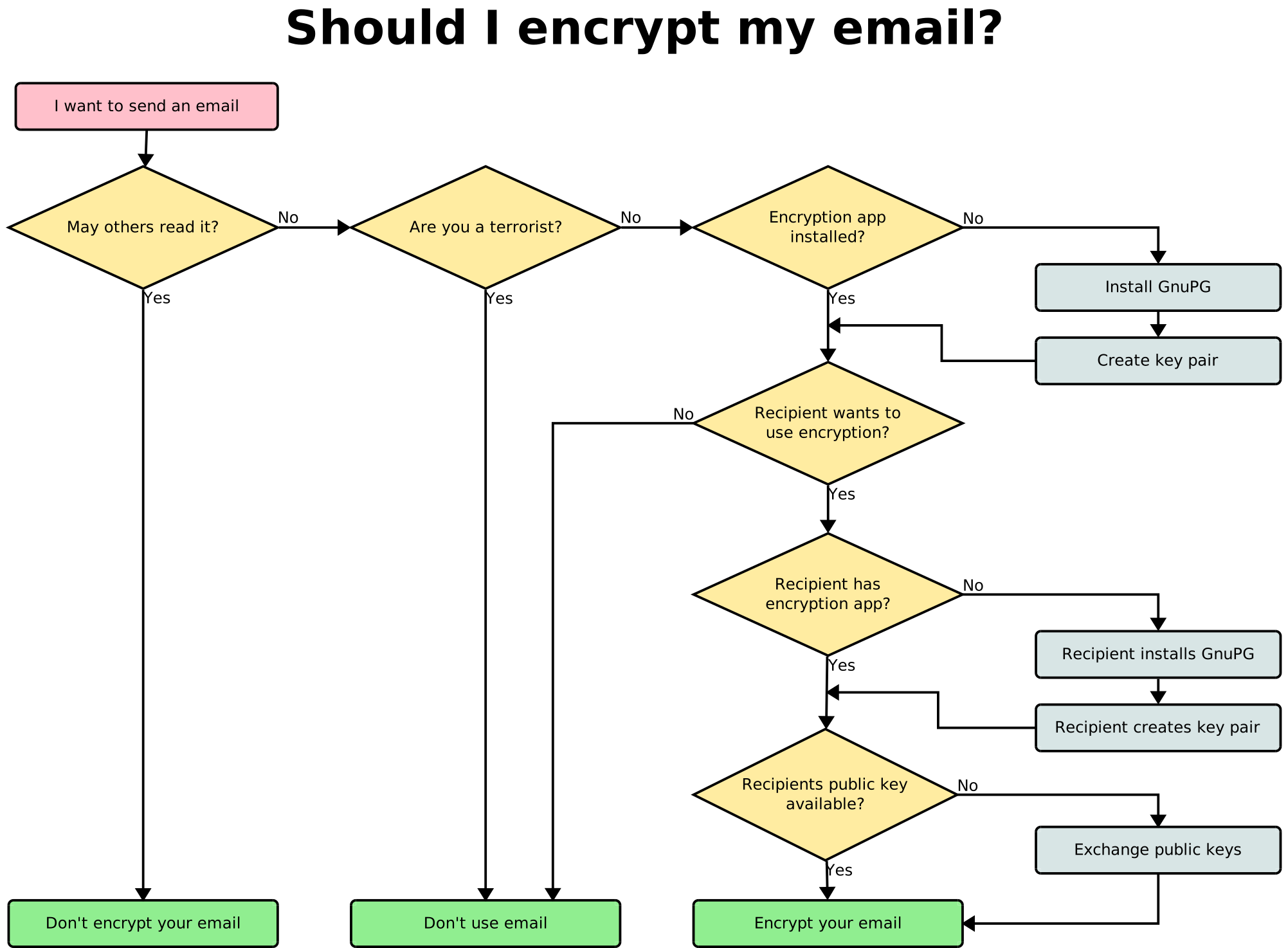
When I outline, I follow a story through scenes and show how my characters interact. I often have more than one character to follow so they have parallel flow charts on a page showing how they will interact. Sort of like this:
In my case, the orange diamonds would be characters at the top and the events would go down as the diamonds do in the third column. Sometimes there are gaps in columns where a character is happily or unhappily  involved in some other event and not part of the main story. Perhaps they are locked in a room or something. Or they could have their own events going on that later become part of the main action. At some point, they all interact in the climax. Details I think of when I am outlining would be the gray rectangles I can web off of the diamonds.

How do you outline, or how would you if you used an outline?

Some people say don't use an outline because it squashes your creativity. I have found, though, that even if the characters go a completely different way as I am writing than I had planned, I can either write a new outline, figure out how to get back to the solution I had planned in my original outline, or scrap that idea all together and just write. If an outline only gets you started, then use it! No one said you had to follow it.


Creative Commons License
This work is licensed under a Creative Commons Attribution-Noncommercial-No Derivative Works 3.0 United States License.